
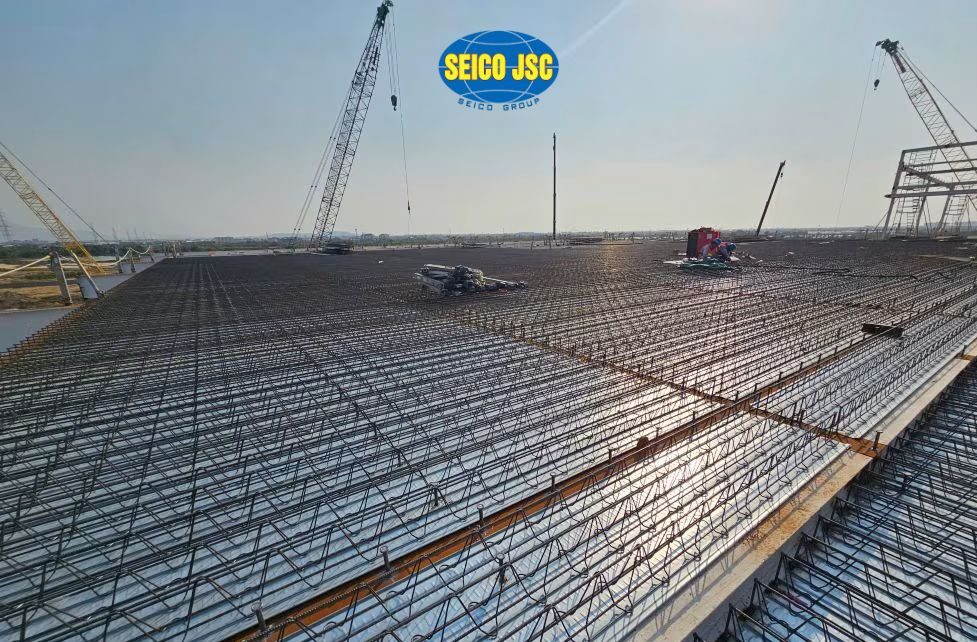
Data center design and construction is a mission-critical discipline in the digital economy, where reliability, scalability, and efficiency directly impact business continuity. As demand for cloud computing, AI workloads, and hyperscale infrastructure continues to grow, organizations must invest in data centers that are not only robust but also adaptable to rapid technological changes. For developers, engineers, and investors, designing a data center is far more complex than constructing a standard industrial building—it requires precise integration of IT infrastructure, power systems, cooling technologies, and redundancy strategies.
In regions like Southeast Asia, including Thailand, data center projects must also consider environmental factors such as high ambient temperatures, humidity, and energy availability. Additionally, the rise of edge computing and regional data hubs is driving the need for scalable and modular design approaches. As a result, modern data center construction emphasizes high availability, energy efficiency, and future-ready infrastructure.
Key Design Considerations for Data Centers
Designing a data center requires a comprehensive approach that integrates site selection, power availability, cooling efficiency, and network connectivity. Location plays a critical role, as proximity to fiber networks and stable power grids significantly affects performance and uptime. Environmental risks such as flooding, seismic activity, and extreme weather conditions must also be carefully assessed.
In addition, compliance with international standards such as Uptime Institute Tier classifications and ANSI/TIA-942 is essential to ensure reliability and operational performance. A well-designed data center must balance redundancy, efficiency, and cost, while maintaining flexibility for future expansion.
Scalable Infrastructure and Modular Design
Scalability is one of the most important aspects of modern data center design. Modular infrastructure allows operators to expand capacity incrementally without disrupting existing operations. This includes modular server racks, prefabricated data halls, and containerized data center solutions.
A scalable design ensures that capital expenditure is optimized, as capacity can be added based on demand rather than overbuilt upfront. This approach is particularly beneficial for colocation providers and hyperscale operators that experience rapid growth in data processing requirements.
Power Systems and Redundancy Planning
Power infrastructure is the backbone of any data center. Reliable and uninterrupted power supply is achieved through a combination of utility feeds, backup generators, uninterruptible power supply (UPS) systems, and power distribution units (PDUs).
Redundancy configurations such as N+1, 2N, or 2N+1 are commonly implemented to minimize downtime risks. In high-tier data centers, dual power paths are used to ensure continuous operation even during component failures. Efficient power management systems are also critical to reduce energy consumption and improve Power Usage Effectiveness (PUE).
Cooling Systems and Thermal Management
Cooling is a major challenge in data center operations, especially in tropical climates. Effective thermal management is essential to maintain optimal performance and prevent equipment failure. Common cooling solutions include air-based systems such as Computer Room Air Conditioning (CRAC) and Computer Room Air Handler (CRAH), as well as advanced liquid cooling technologies.
Hot aisle and cold aisle containment strategies are widely used to improve airflow efficiency and reduce energy consumption. In high-density environments, liquid cooling solutions are becoming increasingly popular due to their superior heat dissipation capabilities.
Data Center Layout and Space Optimization
Efficient layout planning is crucial to ensure proper airflow, cable management, and maintenance accessibility. Data center layouts typically follow structured rack arrangements with clear separation between IT zones, power infrastructure, and cooling systems.
Optimizing space utilization not only reduces construction costs but also improves operational efficiency. Proper zoning and rack density planning help prevent hotspots and ensure balanced load distribution across the facility.
Integration with Building and Structural Systems
Data center design must be closely aligned with structural and architectural elements. Floor loading capacity, ceiling height, and column spacing all affect equipment placement and scalability. Raised floor systems are often used to manage cabling and airflow, although slab-based designs are also gaining popularity in hyperscale facilities.
Structural systems must also support heavy equipment such as generators, UPS systems, and cooling units. Therefore, early coordination between engineering disciplines is essential to avoid costly modifications during construction.
Reliability, Security, and Compliance
Data centers must meet strict requirements for physical security, operational reliability, and regulatory compliance. This includes access control systems, surveillance, fire suppression systems, and disaster recovery planning.
Compliance with international standards and local regulations ensures that the facility can operate safely and efficiently. High-reliability data centers often incorporate multiple layers of redundancy and security to protect critical data and infrastructure.
Energy Efficiency and Sustainability
Energy consumption is a major concern in data center operations. Designing for energy efficiency not only reduces operational costs but also supports sustainability goals. Techniques such as free cooling, renewable energy integration, and high-efficiency power systems are increasingly adopted.
Monitoring metrics like PUE helps operators evaluate and optimize energy performance. Green building certifications and ESG considerations are also becoming important factors in data center investment decisions.
Impact on Cost and ROI
Data center design has a direct impact on both capital expenditure (CAPEX) and operational expenditure (OPEX). While high-redundancy systems and advanced cooling solutions may increase initial costs, they significantly reduce the risk of downtime and long-term operational inefficiencies.
A well-designed data center improves uptime, reduces maintenance costs, and enhances scalability, leading to a stronger return on investment over time. Poor design decisions, on the other hand, can result in costly retrofits and operational limitations.
How Requirements Vary by Data Center Type
Different types of data centers have varying design requirements. Enterprise data centers focus on internal business operations, while colocation facilities prioritize flexibility and multi-tenant support. Hyperscale data centers require massive scalability and standardized design for rapid deployment.
Edge data centers, on the other hand, are designed for low latency and are often located closer to end users. Understanding these differences is essential for developing a design strategy that aligns with operational goals.
Conclusion
Data center design and construction is a complex process that requires careful integration of infrastructure, power systems, and cooling technologies. A successful data center must be scalable, reliable, and energy-efficient, while also being adaptable to future technological advancements.
With proper planning and engineering, organizations can build data centers that not only meet current demands but also support long-term digital growth and competitiveness.
It ensures high availability, efficient operation, and scalability. A well-designed data center minimizes downtime risks and supports long-term business continuity.
Scalability refers to the ability to expand IT capacity, power, and cooling systems without major disruptions, allowing data centers to grow with demand.
Redundancy systems such as backup power and multiple distribution paths ensure continuous operation even during equipment failures.
It depends on the density and location. Air cooling is common, but liquid cooling is increasingly used for high-density and AI workloads.
By using efficient cooling systems, optimizing power usage, implementing renewable energy, and monitoring PUE metrics.