
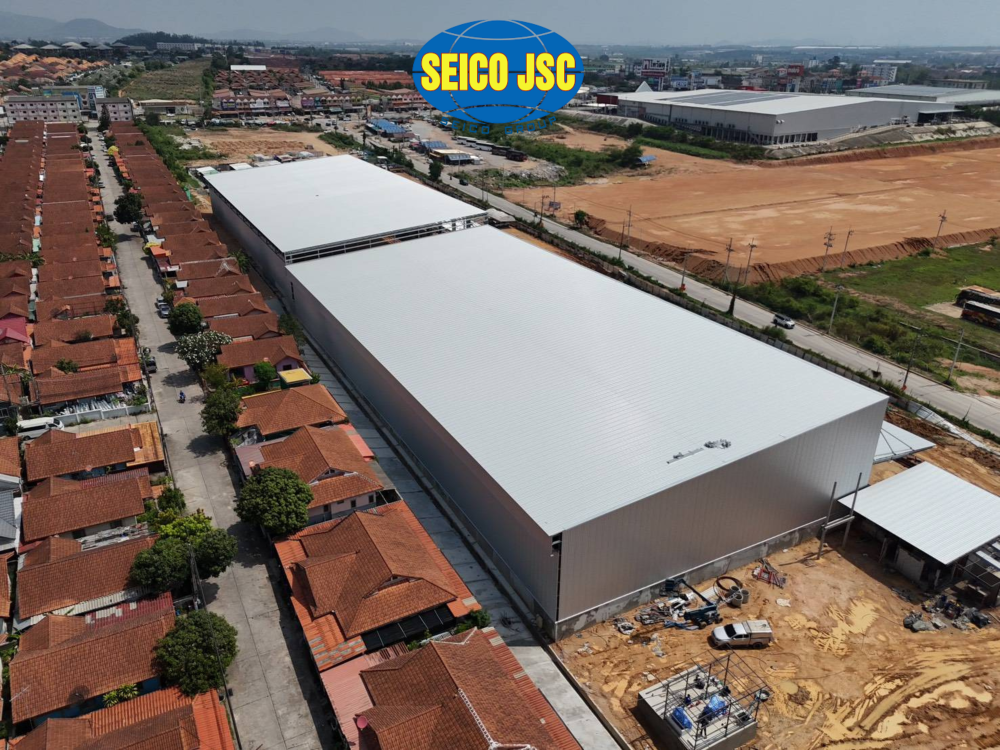
Introduction
Fire safety is one of the most critical aspects of industrial building design in Thailand, particularly for steel structure facilities where high temperatures can significantly impact structural integrity. For factory owners, facility managers, and insurance stakeholders, compliance with fire safety regulations is not just a legal requirement—it is a key factor in risk management, operational continuity, and long-term cost control.
In Thailand, industrial buildings must comply with specific legal frameworks such as Ministerial Regulations No. 33 and No. 55 under the Building Control Act. These regulations define fire resistance requirements, building classifications, and safety measures that directly influence how steel structures are designed, protected, and maintained.
Thai Building Code Requirements for Industrial Buildings
Industrial steel buildings in Thailand must be designed in accordance with fire safety provisions outlined in national building regulations. These include requirements related to fire resistance ratings of structural elements, fire compartmentation, means of egress, and installation of fire protection systems.
Depending on the size, occupancy, and risk level of the facility, buildings may be required to meet specific fire resistance durations, typically ranging from 1 to 3 hours. These requirements directly affect structural member sizing, fireproofing materials, and overall system selection.
Failure to comply with these regulations can lead not only to legal penalties but also to delays in project approval and increased insurance premiums.
Passive Fire Protection Methods for Steel Structures
Steel, while strong and efficient, loses its load-bearing capacity when exposed to high temperatures. Therefore, passive fire protection plays a crucial role in maintaining structural stability during a fire event.
Common protection methods include intumescent coatings, which expand when exposed to heat and create an insulating layer around steel members. Fire-resistant boards and spray-applied fireproofing materials are also widely used to achieve required fire ratings.
The choice of fire protection system depends on factors such as aesthetic requirements, exposure conditions, maintenance considerations, and budget constraints.
Compartmentalization and Fire Separation
Fire compartmentalization is a key strategy in industrial building design to prevent the spread of fire across large factory spaces. By dividing a facility into smaller fire-resistant zones, the impact of a fire can be contained, allowing more time for evacuation and firefighting.
This involves the use of fire-rated walls, floors, and doors that meet specific resistance standards. In facilities such as warehouses or manufacturing plants with high fire loads, proper compartmentalization is often mandatory under Thai regulations.
Emergency Egress and Evacuation Planning
An effective fire safety design must also ensure safe and efficient evacuation of occupants. This includes the proper layout of exit routes, emergency doors, signage, and lighting systems.
The number and width of exits are determined based on occupancy load and building size. Poor planning in this area can result in non-compliance and increased risk during emergencies.
Insurance Requirements and Cost Implications
Insurance providers in Thailand closely evaluate fire safety measures when determining coverage and premium rates for industrial facilities. Buildings with higher fire resistance ratings, proper compartmentalization, and certified fire protection systems are often eligible for lower premiums.
On the other hand, inadequate fire protection can lead to higher insurance costs or even difficulty in obtaining coverage. Therefore, investing in proper fire safety design at the initial stage can result in significant long-term financial benefits.
How Fire Protection Requirements Vary by Facility Type and Occupancy Classification
Fire protection requirements are not uniform across all industrial buildings. They vary significantly depending on the type of facility and its occupancy classification.
For example, a warehouse storing non-combustible goods may require lower fire resistance ratings compared to a chemical processing plant or a food manufacturing facility with high combustible loads. Similarly, facilities handling hazardous materials are subject to stricter regulations, including enhanced fire separation, explosion prevention measures, and specialized suppression systems.
Understanding these differences is essential when selecting a structural system, as it directly impacts design complexity, material selection, and overall project cost. A well-planned steel structure must align with the specific fire safety requirements of its intended use to ensure compliance and operational safety.
Conclusion
Fire safety and building code compliance are fundamental considerations in the design of industrial steel structures in Thailand. From regulatory requirements to insurance implications, every aspect of fire protection must be carefully integrated into the structural design process.
By addressing fire resistance, compartmentalization, evacuation planning, and facility-specific requirements, project stakeholders can ensure not only compliance but also long-term safety and cost efficiency.
FAQ
Fire protection is essential because steel loses its strength at high temperatures, which can lead to structural failure. Proper fireproofing helps maintain stability during a fire, allowing more time for evacuation and emergency response.
The required fire rating depends on the building type, size, and usage. Most industrial buildings must meet fire resistance standards ranging from 1 to 3 hours, as defined by Thai building regulations.
Common methods include intumescent coatings, fire-resistant boards, and spray-applied fireproofing materials. The selection depends on design requirements and environmental conditions.
Buildings with better fire protection systems and higher compliance standards typically receive lower insurance premiums, while poorly protected buildings may face higher costs or limited coverage options.