In recent years, Northeastern Thailand has gained increasing attention as a new location for factories and production bases for both Thai and international businesses. This includes manufacturers expanding capacity beyond Bangkok and the EEC factories, as well as companies seeking to establish their first factory in Thailand. Provinces such as Nakhon Ratchasima, Khon Kaen, and Udon Thani are now being seriously evaluated as strategic industrial locations.
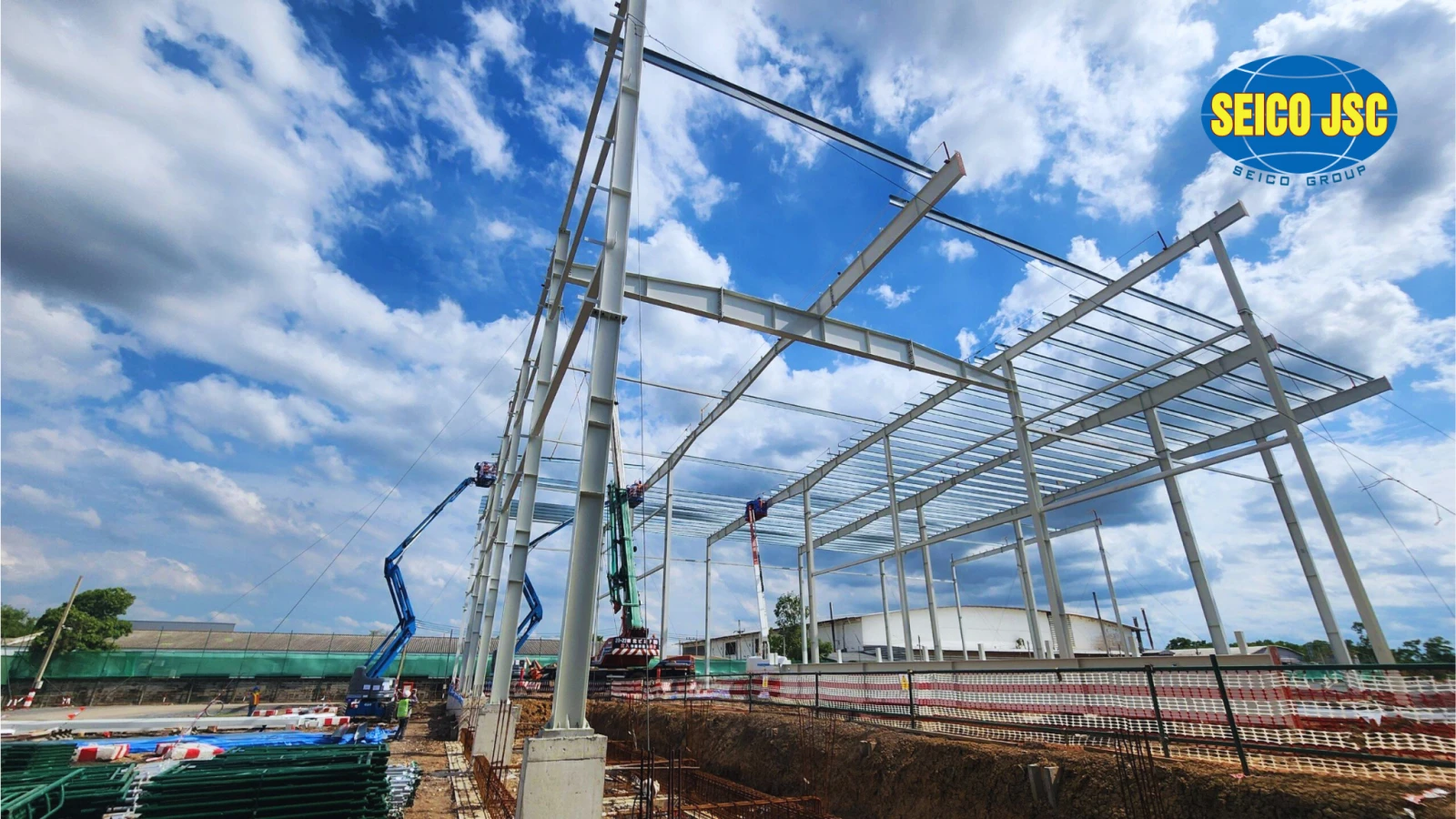
When the decision to relocate or expand production is made, the key considerations go far beyond land prices or location alone. Factory owners must also plan building structures that suit the local environment, construction timelines, and long term business growth. Many factories in Northeastern Thailand are now choosing steel structures and pre engineered building systems, commonly known as PEB factories, because they offer speed, flexibility, and better cost control over time compared to traditional construction approaches.
This article provides an overview of industrial development in Northeastern Thailand from the perspective of industrial building design and structural planning. It explores the growth drivers of the region, the roles of Nakhon Ratchasima, Khon Kaen, and Udon Thani, and explains why choosing the right steel structure company directly impacts operational efficiency and long term investment value, especially for businesses expanding beyond Thailand’s traditional industrial zones.
Why Northeastern Thailand Is Being Chosen as a New Industrial Base
The expansion of factories outside Bangkok and the EEC is driven by several factors that have become increasingly evident in recent years. Northeastern Thailand now meets the needs of both Thai entrepreneurs and foreign investors who want to diversify supply chain risk and establish production facilities in regions with strong future potential.
One key factor is the China Plus One strategy, where companies seek to reduce dependence on manufacturing in a single country. As businesses look for alternative production bases in Thailand with lower land and labor costs than major industrial zones, provinces in Northeastern Thailand are being seriously considered, particularly for factories that do not require constant proximity to major ports or international airports.
Labor availability is another important consideration. Northeastern Thailand continues to have a large local workforce, with average wage levels lower than major metropolitan areas. Following the COVID period, more workers have returned to their home provinces, making long term workforce planning easier compared to highly competitive labor markets such as Samut Prakan or Chonburi.
From a policy perspective, the region continues to receive strong government support through BOI incentives and large scale infrastructure projects. These include motorways, double track railways, and high speed rail connections linking Bangkok to Nakhon Ratchasima. As a result, logistics and transportation from factories in Northeastern Thailand are no longer the limitations they once were.
The Role of Nakhon Ratchasima, Khon Kaen, and Udon Thani as Industrial Hubs
Although Northeastern Thailand is often viewed as a single region, each province plays a distinct role in industrial development. Nakhon Ratchasima, Khon Kaen, and Udon Thani are the three primary locations most investors compare when planning factories or distribution centers in the Northeast.
Nakhon Ratchasima serves as the main gateway to the region, both in terms of distance from Bangkok and transportation infrastructure. With motorway connections and future high speed rail projects, it is well suited for factories that still rely on supply chains linked to Central Thailand or require frequent transport to and from Bangkok. Surrounding districts offer large land plots ideal for PEB factories and industrial buildings designed for phased expansion.
Khon Kaen plays a different role as the economic and logistics center of Central Northeast Thailand. The city benefits from universities, hospitals, and urban infrastructure that support a semi skilled to skilled workforce. This makes it suitable for factories with more complex production processes, processing plants, or regional distribution centers serving the domestic market. Steel structure design in Khon Kaen often focuses on mixed use layouts that combine warehousing, production areas, and office space within a single facility.
Udon Thani is a strategic hub for Upper Northeastern Thailand, particularly for businesses connected to Laos, Vietnam, and Southern China. With an international airport and cross border road networks, the province is well suited for export oriented manufacturing and regional logistics operations. Industrial building design in this area often prioritizes fast construction timelines and flexible layouts that can adapt to changing market directions.
Why Steel Structures and PEB Factory Buildings Are Ideal for Northeastern Thailand

- Faster construction with reduced seasonal risk
Northeastern Thailand experiences long rainy seasons, and some sites can be difficult to access during construction. Steel structures and PEB systems use prefabricated components manufactured off site, significantly reducing on site construction time and minimizing weather related risks.
- More accurate budget control compared to traditional construction
For investors relocating from Bangkok or the EEC, cost clarity is critical. PEB systems allow structural costs to be estimated early in the project, reducing the risk of budget overruns and making them ideal for projects requiring careful financial planning.
- Support for large sites and future expansion
Provinces such as Nakhon Ratchasima, Khon Kaen, and Udon Thani offer large land plots suitable for long term factory development. Steel structures allow for wider column spans, fewer internal columns, and easier future expansion compared to concrete buildings.
- Suitable for a wide range of factory types
From agricultural processing plants and warehouses to logistics centers and manufacturing facilities, steel structures can be customized to meet specific operational requirements, including building height, crane loads, and production zoning.
- Efficient material logistics and installation
Compared to large scale concrete construction, transporting steel components to Northeastern Thailand is more efficient and requires fewer on site workers, which aligns well with labor availability in certain areas.
- Designed for mid to long term investment planning
Many investors start with medium sized factories and expand production within three to five years. Steel structures and PEB systems support this phased growth without requiring demolition of existing buildings.
- Ideal for first time factory investors in the region
For companies establishing their first factory outside Bangkok, choosing a standardized and easy to manage structural system reduces complexity and risk during the initial project phase.
Logistics and Infrastructure Factors Affecting Industrial Building Design in Northeastern Thailand
One of the main factors influencing design is transportation routes for raw materials and finished goods. Nakhon Ratchasima, Khon Kaen, and Udon Thani are becoming key logistics nodes connected by highways, railways, and cross border trade routes. Factory buildings must therefore accommodate large truck access, loading yards, and efficient loading bay layouts, which steel structures allow with greater flexibility.
Another often overlooked factor is distance from suppliers and specialized contractors. In some parts of Northeastern Thailand, sourcing construction materials or skilled labor can take longer. PEB factory systems mitigate this by centralizing fabrication and simplifying on site installation, reducing reliance on large local workforces.
Infrastructure systems such as electricity, water supply, and utilities also influence building design. Many factories require space for transformers, backup power systems, or large water tanks. Steel structures make it easier to integrate these facilities with the main building and expand them later without disrupting operations.
Finally, long term logistics growth must be considered. Many projects start as medium sized factories or warehouses but plan to expand distribution capacity over time. Steel structures and PEB systems allow additional loading bays or storage areas to be added with minimal downtime.
Conclusion: Building Structure as the Foundation for Growth in Northeastern Thailand
Industrial development in Northeastern Thailand, including Nakhon Ratchasima, Khon Kaen, and Udon Thani, has become a strategic option for businesses seeking to expand beyond Bangkok and the EEC. Factors such as land costs, labor availability, infrastructure investment, and government incentives create strong long term potential. However, fully capitalizing on these opportunities depends on proper structural planning from the start.
Steel structures and PEB factory buildings allow factories in the Northeast to launch faster, control budgets more effectively, and adapt to future business growth more easily than traditional construction. Whether expanding production areas, adjusting machinery layouts, or adding new phases, forward planned structures reduce risk and support continuous operations.
For businesses considering factory development in Northeastern Thailand, viewing building structures as a business tool rather than a construction expense is the key to achieving sustainable long term results.
Plan Your Northeastern Thailand Factory Project with SEICO
If you are looking for a team that understands both the industrial landscape of Northeastern Thailand and the technical requirements of steel structure and PEB factory design, SEICO Thailand is ready to support your project from initial consultation and concept planning to structural design, fabrication, and on site installation.
Working with an experienced industrial construction partner helps you make confident decisions and ensures your factory is built to support future growth.
👉 View SEICO’s industrial project portfolio
👉 Contact SEICO to discuss factory projects in Nakhon Ratchasima, Khon Kaen, and Udon Thani
Frequently Asked Questions (FAQ)
- How is building a factory in Northeastern Thailand different from Bangkok or the EEC
The main differences are land costs, labor costs, and site density. Northeastern Thailand has fewer zoning constraints, allowing more flexible factory layouts. Construction timelines and site management are often more efficient than in major urban areas.
- Are steel structures and PEB factories suitable for Northeastern Thailand
Yes. They are particularly suitable for projects requiring fast startup and cost control. PEB systems reduce on site construction time and allow future expansion planning, making them ideal for phased business growth.
- Does the climate in Northeastern Thailand affect factory building design
Yes. High temperatures and seasonal winds require buildings to be designed for ventilation, heat protection, and wind loads to ensure safe operations and long term energy efficiency.
- How should new factories plan for future expansion
Structural planning should begin at the concept stage by defining column grids, spans, and floor levels that allow future extensions without altering the main structure. Steel structures and PEB systems offer the most efficient solution.
- What should be considered when using local contractors in Northeastern Thailand
Local contractors understand the area and offer cost advantages, but working with experienced industrial structure specialists ensures consistent quality, standards, and reduced rework risks.
- At what stage can SEICO support factory projects in Northeastern Thailand
SEICO supports projects from early consultation and site feasibility analysis through steel structure and PEB design, fabrication, installation, and technical coordination to keep projects on schedule and within budget.