
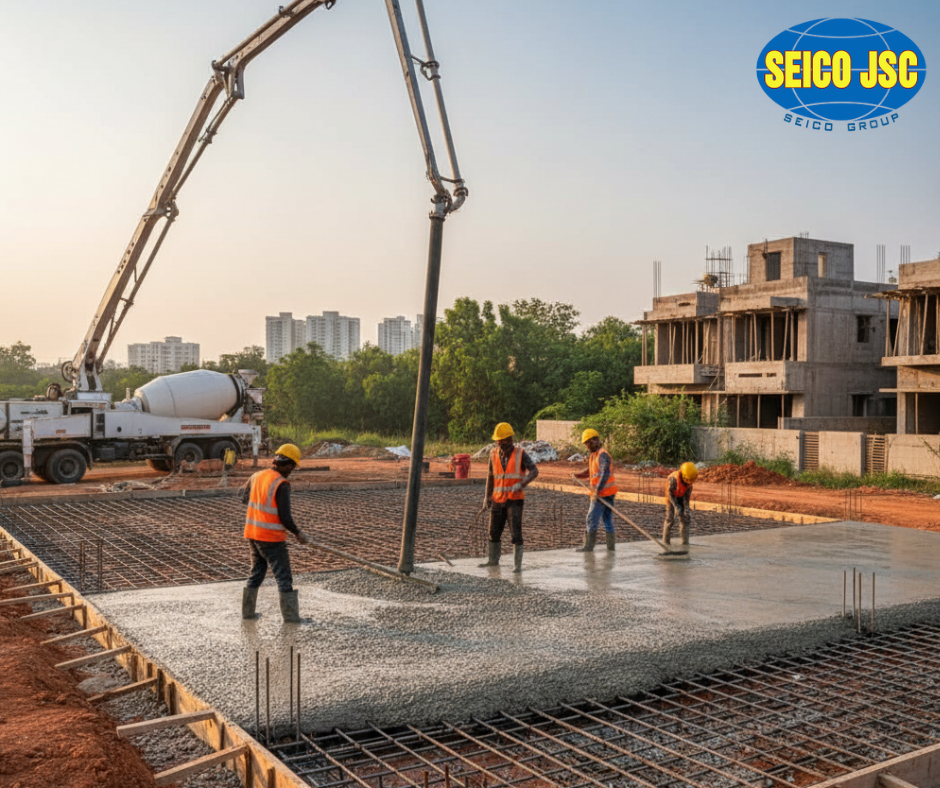
Choosing between PEB (Pre-Engineered Building) and RCC (Reinforced Concrete Construction) is one of the most critical strategic decisions when developing factories and warehouses in Thailand. In an environment where material costs and labor rates are highly volatile, cost comparison goes far beyond price per square meter. It must also consider construction time (Time Value of Money), space efficiency, and long-term maintenance costs (Lifecycle Cost), all of which directly impact return on investment (ROI).
In the Thai context, RCC remains a conventional and widely used construction method due to familiarity and material availability. However, the rapid growth of industrial zones such as the Eastern Economic Corridor (EEC), along with increasing demand for large clear-span buildings, has driven the rising popularity of PEB systems. Their precision engineering and faster installation timelines make them highly suitable for modern industrial requirements.
Key Factors in Construction Cost Comparison in Thailand
A proper comparison between PEB and RCC must evaluate the total project cost, not just initial construction expenses. RCC structures typically have lower base material costs but higher labor and time requirements due to complex on-site construction processes.
In contrast, PEB structures rely heavily on steel pricing but offer significant savings in foundation work due to their lighter weight. Additionally, prefabrication in controlled factory environments (off-site fabrication) and rapid on-site assembly reduce labor costs and construction risks.
Thailand’s long rainy season also plays a crucial role, as RCC projects are more prone to delays. These delays translate into opportunity costs, such as postponed operations and lost revenue. PEB systems mitigate these risks through faster and more predictable construction timelines.
Common Structural Types Used in Thailand
The choice of structure depends on building function, scale, and project constraints. Common options include:
- PEB (Pre-Engineered Building): Ideal for large factories, warehouses, and showrooms requiring clear spans of 30–100 meters without internal columns
- RCC (Reinforced Concrete): Suitable for office buildings, multi-story facilities, and smaller factories requiring high structural rigidity
- Hybrid Structures: A combination of concrete columns and steel roofing systems, balancing cost efficiency and structural performance
Cost Efficiency Through Construction Speed
One of the most significant advantages of PEB is construction speed, typically reducing project timelines by 30–50% compared to RCC.
Shorter construction periods lead to lower site overhead costs, reduced financing expenses (such as construction-phase interest), and faster project commissioning. This enables businesses to generate revenue sooner and improve cash flow—an essential factor in today’s competitive industrial landscape.
Impact on Factory Layout and Space Utilization
Structural choice directly affects layout flexibility and operational efficiency:
- PEB: Offers wide column spacing, enabling flexible machine placement and uninterrupted workflow
- RCC: Typically limited to column grids of 8–10 meters, which may restrict large-scale production layouts or increase costs for wider spans
PEB structures therefore provide a clear advantage in optimizing usable space and improving workflow efficiency.
Safety and Fire Resistance Considerations
From a fire safety perspective, RCC structures naturally provide better fire resistance. PEB structures, however, require additional fire protection measures such as intumescent coatings or automatic fire suppression systems to comply with Thai building regulations.
These safety-related costs must be included in the overall cost analysis to ensure regulatory compliance and long-term risk reduction.
Design for Sustainability and Smart Factory Integration
PEB structures are well-suited for modern industrial trends, including solar rooftop installation and smart ventilation systems. Their roof structures can be pre-engineered to support additional loads, making future upgrades easier and more cost-effective.
Furthermore, steel is a recyclable material, aligning with Green Building concepts and potential investment incentives from Thailand’s Board of Investment (BOI).
Impact on Cost and Return on Investment (ROI)
Although the initial construction cost of PEB may appear higher in some cases, it often delivers better value when considering total project cost. For facilities larger than 1,000 square meters, PEB typically provides higher efficiency and faster ROI.
Reduced column requirements can increase usable space by approximately 10–15%, directly enhancing storage capacity and operational profitability.
Conclusion
There is no one-size-fits-all answer when choosing between PEB and RCC. The decision depends on the project’s strategic priorities.
If the goal is speed, large open space, and flexibility, PEB is often the most cost-effective solution. On the other hand, RCC remains a strong choice for smaller buildings, multi-story structures, or projects requiring inherent fire resistance.
Careful planning and early-stage design optimization are essential to selecting the most suitable structure and maximizing long-term investment returns.
For wide-span buildings (20 meters and above), PEB is generally more cost-efficient due to reduced foundation and labor costs.
Yes. A medium-sized PEB structure can be completed in 2–3 months, while RCC may take 6–8 months.
Yes. With proper coating and maintenance, PEB structures can last 30–50 years or more.
PEB is more flexible due to its bolted connection system, allowing easier expansion or modification.
No. There are many qualified PEB manufacturers and contractors, especially in major industrial zones.