

Expanding a factory or warehouse in Thailand today is no longer just about columns, beams, and roofing. The floor system has become one of the key elements that shapes construction speed, machinery layout, and how easily the space can be adapted in the future. This is especially true for industrial projects that plan to add mezzanine levels, create multi-use floor zones, or support changing load requirements as the business grows.
One system that is gaining more attention in factory and warehouse construction is the Truss Deck floor system. By reducing on-site steps and allowing structural and MEP teams to work in a more coordinated sequence, Truss Deck changes how projects move from structure to operational space. For developments that are planned with long-term expansion in mind, many engineering teams now view the floor system as a structural platform rather than a temporary construction component.
In this context, SEICO Thailand developed SP Deck as an industrial Truss Deck system that connects structural design, factory production, and on-site delivery and installation into a single coordinated process. This follows the same engineering approach used in PEB building systems for factories and warehouses, where structure, timeline, and future adaptability are considered together from the planning stage.
This article walks through the fundamentals of what Truss Deck is, where it is commonly used, how it fits the needs of factories in Thailand, and why SP Deck by SEICO is positioned as a long-term floor system designed for ongoing use and expansion rather than only for faster construction at the start of a project.
What Is Truss Deck and Where Is It Used in Construction
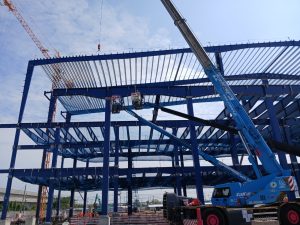
Truss Deck is a reinforced concrete floor system that combines a steel truss structure with a permanent metal form. During construction, it acts as both temporary support and part of the final structural system after the concrete is poured and cured. Instead of relying on extensive timber formwork or heavy shoring, installation teams place Truss Deck panels directly onto beams or the main structural frame, add reinforcement steel according to engineering drawings, and then pour concrete to complete the floor on site.
What makes this system increasingly popular in industrial construction is how it streamlines the transition between structural work and architectural and MEP coordination. Since the floor also serves as a working platform during construction, electrical, piping, and other MEP contractors can begin planning routing paths and connection points earlier, without waiting for formwork and supports to be removed.
In factory and warehouse projects, Truss Deck is commonly used in areas that require mezzanine levels, office floors above production zones, loading platforms, or sections designed for specific operational loads such as machinery bases or multi-level storage systems. The system is also widely applied in multi-storey industrial buildings and distribution centers where space needs to remain flexible as operational workflows change over time.
When a project is based on a steel structural system such as a PEB building for factories and warehouses, Truss Deck becomes the link between the primary structure and the usable interior space. This allows building layouts and future expansion strategies to be considered during the design phase, rather than being treated as modifications after construction is complete.
Key Benefits of Truss Deck for Factories and Warehouses in Thailand
In industrial projects across Thailand, the challenge is not only to complete the building according to plan, but also to manage construction timelines, coordinate MEP systems, and maintain the ability to adapt the space as production and logistics requirements evolve. For this reason, Truss Deck is often treated as a strategic floor system rather than a purely architectural element.
1. Shorter On-Site Workflow and Faster Construction Timelines
Truss Deck acts as a permanent formwork system, eliminating much of the temporary timber or steel support typically required for conventional concrete floors. Once the panels are installed on the main structure, reinforcement and concrete pouring can proceed without delay. This compressed workflow reduces the gap between structural and MEP activities, which directly affects how quickly a factory or warehouse can move toward operational readiness.
2. Early Integration of MEP System Planning
The open structural layout beneath a Truss Deck allows designers to plan pipe runs, cable trays, and ventilation systems in alignment with the building layout from the start. This makes future service modifications easier, since MEP contractors can access and adjust routing without affecting the main structural components.
3. Flexibility for Vertical Space Expansion
Many factories and warehouses in Thailand begin as single-level buildings and later add mezzanines or internal office spaces. Truss Deck supports this phased development approach by allowing additional floor levels to be integrated into the existing structure with minimal need for major beam reinforcement or structural demolition.
4. Load Performance and Span Efficiency for Industrial Use
Truss Deck systems are engineered to handle a wide range of operational loads, from office spaces and storage areas to machinery zones and multi-tier racking systems. Longer beam spans reduce the number of interior columns, keeping the floor plan open and making it easier to organize production lines and logistics pathways.
5. Structural Integration with Steel Building Systems
In projects that use steel frames such as PEB buildings for factories and warehouses, Truss Deck forms a continuous system with the main structure. Columns, beams, floors, and mezzanines can be engineered within a single design framework, reducing the risk of misalignment between structural and architectural work during construction.
For these reasons, Truss Deck is often selected not simply because it installs quickly, but because it supports long-term expansion, space reconfiguration, and system coordination throughout the life of the building.
How SP Deck by SEICO Differs from Standard Truss Deck Systems
In Thailand’s industrial construction market, many Truss Deck systems may look similar in terms of basic form and installation. The deeper differences tend to appear in engineering processes, manufacturing control, and the level of documentation that supports future expansion and regulatory approvals. This is where SP Deck by SEICO is positioned as a long-term structural platform rather than just a prefabricated floor component.
1. Design Integrated with the Main Building Structure
SP Deck is developed to work as part of the overall steel and building layout from the design stage. Whether the project is a PEB factory, a multi-storey industrial facility, or a warehouse with mezzanine levels, beam locations, load transfer points, and future expansion zones are coordinated within a single engineering system.
2. Manufacturing Standards and Component Consistency
SP Deck components are produced under controlled quality processes that focus on dimensional accuracy and connection point precision. This consistency supports smoother site installation, especially on large projects where panels are delivered and assembled according to a planned construction sequence.
3. Engineering Documentation and Permit Support
Industrial projects often require detailed calculation reports, structural drawings, and material specifications for approvals and inspections. SP Deck systems are supported by coordinated engineering documentation that aligns with the main building structure, making it easier for project managers, consultants, and authorities to review the system as part of a unified design.
4. Long-Term Expansion Compatibility
One of the defining design principles of SP Deck is the ability to define future connection zones and extension paths at the initial floor design stage. This allows additional floors or expanded areas to be added later without major disruption to the main structure or operational areas.
5. Coordination with MEP and Architectural Systems
The structural layout beneath SP Deck is designed to allow MEP contractors to access and modify piping and cabling routes without cutting or altering primary structural members. This reduces the risk of on-site modifications that could affect structural integrity and improves long-term maintenance efficiency.
Overall, SP Deck by SEICO is not positioned as a system that competes only on installation speed. It focuses on integrating the floor system into the long-term structural and operational strategy of industrial buildings, from planning and approvals through expansion and future reconfiguration.
Comparison Table: SP Deck by SEICO vs Standard Truss Deck Systems
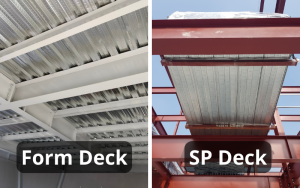
Comparison Aspect | SP Deck by SEICO | Standard Truss Deck Systems |
System Design Concept | Designed as part of the entire building structure, integrated with layout, columns, and beams from the start | Typically designed at the individual floor level, separate from the main structural system |
Load Calculation Process | Uses calculations linked to long-term building use, future floor additions, and equipment loads | Focuses mainly on current construction phase and initial floor specifications |
Manufacturing Standards | Produced under controlled quality processes to ensure component consistency and planned installation sequencing | Quality and consistency depend on individual suppliers or subcontractors |
Installation Efficiency | Supports planned delivery and installation workflows, reducing on-site adjustments | Often requires on-site modifications based on actual conditions |
Expansion Support | Future connection points and extension zones planned at the design stage | Expansion usually requires structural reinforcement or redesign |
MEP Coordination | Structure allows easy routing and modification of pipes and cables without affecting main members | MEP changes may require cutting or altering parts of the structure |
Engineering Documentation | Comes with coordinated calculation sets and drawings aligned with the overall building system | Documentation is often limited to floor systems and must be coordinated separately |
Industrial Suitability | Well suited for multi-storey factories, warehouses, mezzanines, and long-term expansion projects | Better suited for isolated floor areas or short-term construction needs |
Long-Term Cost Impact | Focuses on reducing future modification and expansion costs | Lower initial cost, but higher potential costs for future changes |
What Types of Projects Are Best Suited for Truss Deck
Truss Deck systems are designed for projects that require both construction speed and flexibility in space planning. Their suitability depends largely on how the building will be used and how it is expected to evolve over time.
1. Factories and Warehouses Requiring Vertical Space Expansion
Truss Deck is commonly used in projects that add mezzanine levels inside factories and warehouses to separate storage, office areas, or light-duty work zones from main production floors. This approach maintains open space for material handling and machinery while increasing usable floor area.
2. Multi-Storey Industrial Buildings and Specialized Facilities
In projects that require multiple operational levels such as production lines arranged by floor or internal logistics systems, Truss Deck allows beam and floor layouts to adapt more easily to space and height constraints compared to conventional cast-in-place concrete structures.
3. Projects with Compressed Construction Schedules
The installation sequence of Truss Deck supports continuous progress from structural framing to concrete pouring. This is useful for projects with fixed operational deadlines such as leased warehouses or factories that must align with production startup timelines.
4. Buildings That Require Future Layout Changes
For facilities that anticipate changes such as relocating office areas, expanding storage zones, or introducing automation systems, Truss Deck allows floor layouts to be modified without removing the entire structural system.
5. Projects with Complex Building Systems
Truss Deck supports organized routing of piping, electrical systems, and data lines beneath floors or above ceilings. This makes it suitable for facilities with demanding environmental controls, safety systems, or layered security and monitoring infrastructure.
Conclusion: Choosing the Right Truss Deck and SP Deck System for Factories in Thailand
Selecting a floor system for a factory or warehouse is not just about construction speed or cost per square meter. It also affects how the building will be used, adapted, and expanded over time.
Truss Deck is a strong option for projects that require vertical space optimization, flexible interior layouts, and a streamlined construction workflow. It is particularly well suited for buildings with mezzanines, multi-storey factories, and warehouses that need to evolve alongside business growth.
At the same time, SP Deck by SEICO is positioned as a platform-based floor system rather than a phase-specific solution. Its structure and engineering documentation are designed to integrate with the overall building layout and primary structure from the design stage. This supports future extensions, added floors, and load adjustments without requiring major reconstruction.
Ultimately, the most effective system is the one that aligns with the project’s investment strategy and long-term development plan. Evaluating engineering, construction sequencing, and operational use together helps ensure that the industrial floor system becomes a long-term asset rather than just a construction component.
If you are planning a floor system for a factory or warehouse in Thailand, you can consult with SEICO’s engineering team to assess the suitability of Truss Deck and SP Deck based on your operational needs, expansion plans, and construction conditions. Contact us.
Frequently Asked Questions About Truss Deck
Q1: How does Truss Deck differ from conventional cast-in-place concrete floors
A: Truss Deck combines a steel truss structure with a permanent form, reducing the need for temporary formwork and allowing structural and concrete work to progress in a more continuous sequence compared to traditional cast-in-place floors.
Q2: What types of buildings benefit most from Truss Deck systems
A: Multi-storey factories, warehouses with mezzanine levels, logistics facilities, and projects that require vertical space expansion while maintaining open floor areas for material handling and machinery.
Q3: How is SP Deck by SEICO different in terms of engineering documentation
A: SP Deck includes coordinated calculation reports and drawings that align with the overall building structure, allowing engineers and inspectors to review the floor system as part of a unified design package.
Q4: Can Truss Deck support future building expansion
A: Yes, especially for internal expansion such as mezzanines or additional operational zones. Larger expansions or added floors should be planned during the design stage to ensure proper load paths and structural support.
Q5: How does Truss Deck affect electrical and piping system installation
A: The open structural layout allows easier routing and access for electrical and piping systems, enabling future maintenance and modifications without affecting primary structural members.
Q6: How much construction time can Truss Deck save
A: Many projects see reduced preparation and installation time due to prefabricated components and a clear construction sequence. Actual time savings depend on building size and project complexity.
Q7: What types of projects should consider SP Deck by SEICO as a primary floor system
A: Projects with long-term expansion plans such as growing manufacturing facilities, multi-storey industrial buildings, and warehouses that anticipate increased operational loads over time.
Q8: Do roof and wall materials affect floor system design
A: Yes, they influence overall building loads and environmental performance. Selecting appropriate materials helps ensure that floor and structural calculations remain aligned and reduces the need for later design changes.
Q9: When should floor system planning begin in a project
A: Ideally during the building layout and primary structural design phase so that columns, beams, expansion zones, and building systems can be coordinated within a single engineering framework.