
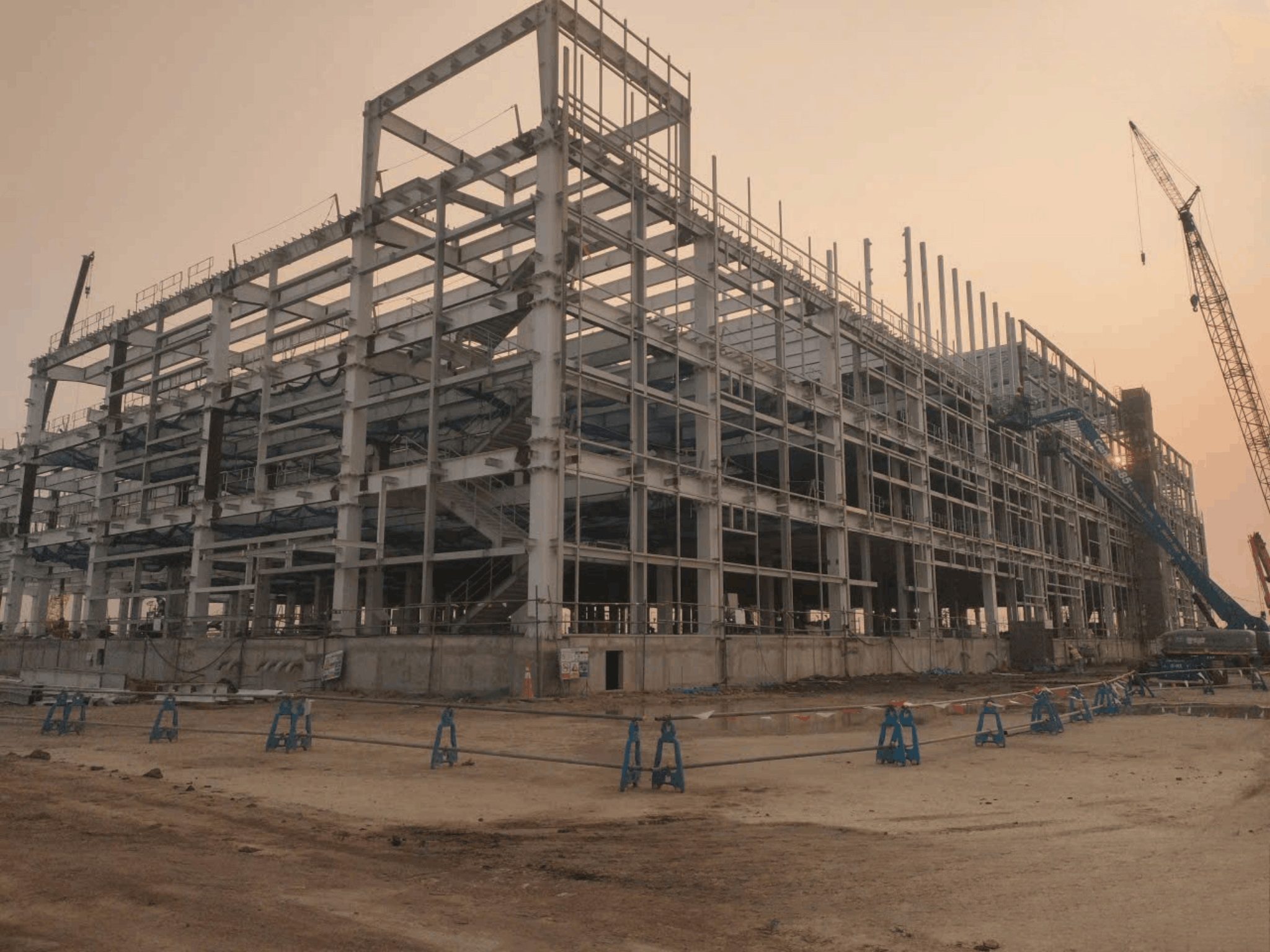
Cold storage facilities are among the most energy-intensive industrial buildings. Whether used for food processing, pharmaceuticals, or cold chain logistics, maintaining stable temperatures is critical to preserving product quality and controlling operating costs. As a result, selecting the right building structure has a direct impact on thermal performance, insulation effectiveness, and long-term return on investment.
Traditionally, RCC construction (Reinforced Cement Concrete) has been widely used in industrial projects. However, for modern cold storage warehouse Thailand projects, many developers and investors are increasingly adopting Pre-Engineered Building (PEB) systems. PEB structures offer advantages in thermal insulation integration, construction speed, flexibility, and overall lifecycle cost.
For businesses seeking to optimize energy efficiency and reduce capital expenditure, understanding the differences between PEB and RCC construction is essential.
Challenges of Cold Storage Warehouse Design and Thermal Isolation
Designing a cold storage facility involves much more than installing refrigeration systems. One of the biggest engineering challenges is minimizing heat transfer between the controlled environment and the surrounding atmosphere.
In tropical countries like Thailand, high ambient temperatures and humidity create significant cooling loads. Poor thermal isolation can result in:
- Increased energy consumption
- Condensation and moisture problems
- Ice formation around joints and doors
- Product quality degradation
- Higher maintenance costs
The building envelope—including walls, roofs, and joints—plays a critical role in maintaining thermal efficiency. Therefore, the structural system must support high-performance insulated panels and provide effective thermal sealing.
PEB vs RCC: Structural Insulation Property Comparisons
When comparing RCC construction and PEB systems, thermal performance depends largely on how easily insulation systems can be integrated into the structure.
RCC Construction
Traditional RCC construction provides high structural strength, but several characteristics can affect thermal efficiency:
- Numerous concrete joints and beams create thermal bridges.
- Surface irregularities make insulated panel installation more complex.
- Longer construction cycles expose structures to moisture before enclosure.
- Additional support systems are often required for sandwich panels.
Although rcc construction remains suitable for many industrial buildings, it may present challenges when strict temperature control is required.
PEB Construction
PEB structures are specifically designed to work seamlessly with insulated sandwich panels.
Advantages include:
- Wide clear spans with fewer structural obstructions.
- Easier installation of PU or PIR panels.
- Reduced thermal bridging.
- Better airtightness and vapor barrier integration.
- Higher flexibility for future expansion.
These characteristics make PEB systems particularly suitable for cold storage and food-related facilities where thermal performance directly affects operating costs.
Total Cost Analysis for Cold Storage Envelope Construction (PEB Savings Breakdown)
Initial construction cost is only one part of the investment equation. The overall cost of a cold storage facility includes both CAPEX and long-term OPEX.
Areas Where PEB Systems Reduce Costs
Lower Structural Weight
Steel structures are lighter than reinforced concrete, reducing foundation requirements and overall material consumption.
Simplified Insulated Panel Installation
PEB frames are manufactured with dimensional accuracy, allowing faster and more efficient installation of insulated wall and roof panels.
Reduced Energy Loss
Better thermal sealing lowers refrigeration loads and reduces electricity consumption throughout the facility’s lifespan.
Lower Maintenance Costs
Less cracking and fewer thermal bridges help prevent condensation and insulation failures.
Faster Return on Investment
Reduced construction time and earlier operation can significantly improve project ROI.
For investors evaluating cold chain projects, lifecycle cost analysis often shows that PEB solutions provide greater long-term value than traditional RCC structures.
Fast-Track Construction Benefits for Refrigerated Facilities
Time-to-market is increasingly important in today’s competitive food and logistics industries.
Unlike conventional RCC construction, which requires extensive on-site work and curing periods, PEB systems are fabricated off-site and assembled rapidly.
Benefits include:
- Shorter project schedules
- Earlier commissioning of refrigeration systems
- Reduced labor requirements
- Lower risk of weather-related delays
- Faster revenue generation
For businesses expanding cold chain capacity, fast-track construction can provide a significant competitive advantage.
Fire Safety and Thermal Panel Sealing Integration in PEB Frames
Modern cold storage facilities must satisfy both thermal and fire safety requirements.
PEB structures are compatible with advanced fire-rated sandwich panels and allow effective integration of:
- Fire-resistant wall assemblies
- Vapor barriers
- Airtight sealing systems
- Smoke control systems
- Fire protection systems
Proper panel joint sealing helps prevent moisture penetration and maintains insulation performance throughout the building lifecycle.
Combined with fire detection and sprinkler systems, PEB facilities can achieve high levels of safety and operational reliability.
Applications in Food Processing and GMP Facilities
Many investors evaluating ราคาสร้างห้องไลน์ผลิตอาหาร GMP ต่อตารางเมตร are also considering whether the structural system can support hygienic requirements and future expansion.
PEB systems provide several advantages for food processing facilities:
- Smooth integration with insulated panels.
- Better environmental control.
- Flexible layouts for production lines.
- Faster construction schedules.
- Easier future modifications and capacity expansion.
These characteristics make PEB structures increasingly popular for food factories, cold rooms, and integrated cold chain facilities.
Summary
Choosing the right structural system is a critical decision in cold storage construction. While RCC construction offers durability and strength, PEB systems provide superior advantages in thermal control, insulation integration, construction speed, and long-term operational efficiency.
For modern cold storage warehouse Thailand projects, PEB structures can help reduce energy consumption, shorten construction schedules, and improve return on investment. As demand for temperature-controlled logistics and food processing continues to grow, PEB systems are becoming the preferred solution for developers seeking both performance and cost efficiency.
Thermal insulation minimizes heat transfer, reduces refrigeration loads, and helps maintain stable temperatures, improving energy efficiency and product quality.
Yes, but RCC structures may require additional insulation support and can create thermal bridges that increase energy consumption.
PEB structures provide easier insulated panel installation, reduced thermal leakage, faster construction, and lower lifecycle costs.
Depending on project size, PEB construction can reduce project schedules by approximately 20–40% compared with conventional RCC construction.
Yes. PEB structures are widely used for food processing facilities and can be integrated with insulated panels and hygienic design requirements.