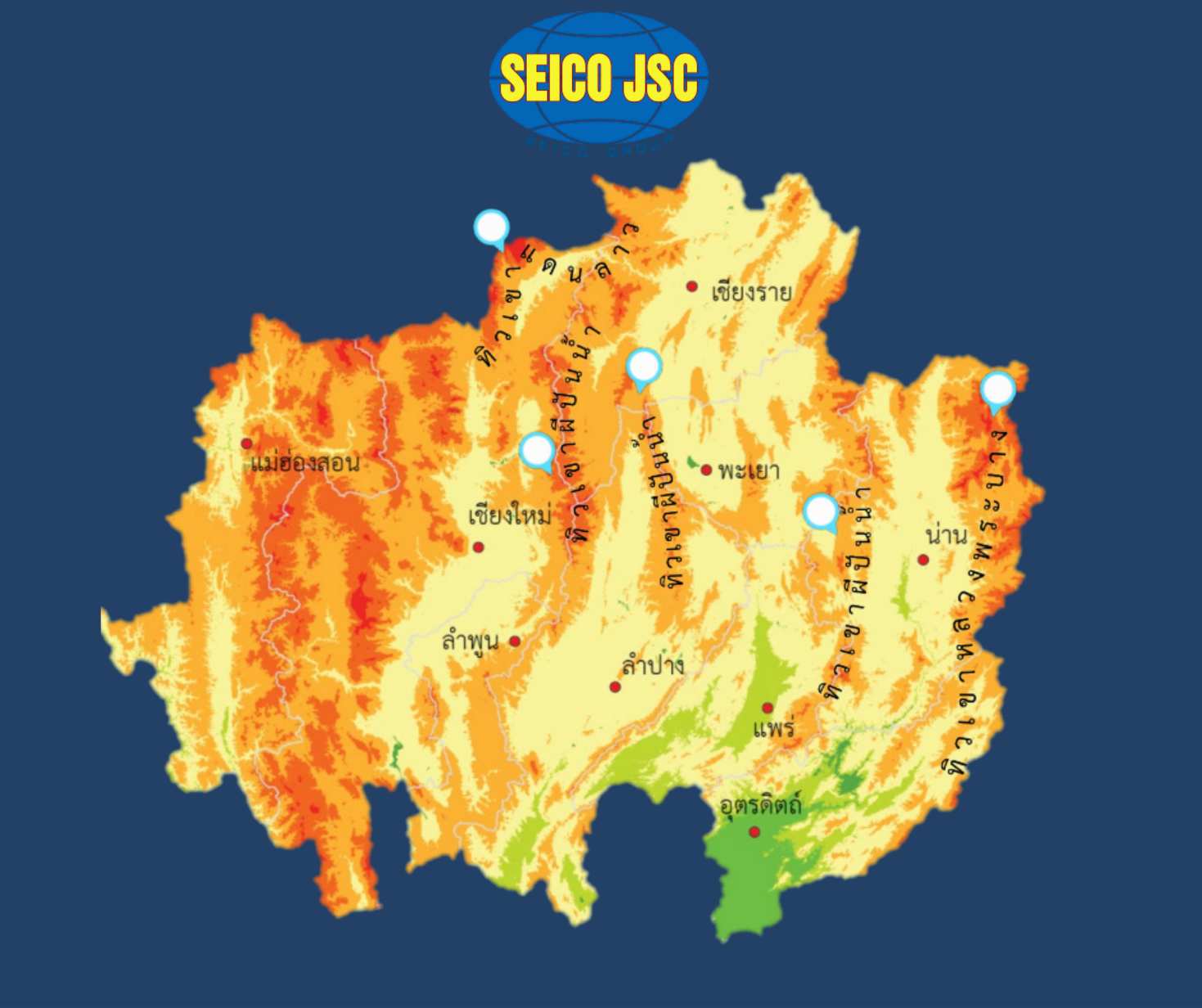
The Northern Thailand Industrial Zone has emerged as a strategic driver of Thailand’s economic growth, particularly in agro-processing, creative industries, and clean electronics. For business owners and investors, selecting a location in Northern Thailand is not merely about securing land for construction—it is about positioning within the East–West Economic Corridor and gaining access to unique natural resources and a highly skilled local workforce.
As of 2026, Northern Thailand is evolving beyond a tourism hub into a regional logistics gateway, connecting to the Greater Mekong Subregion (GMS)—including Myanmar, Laos, and Southern China—via dual-track railways (Den Chai–Chiang Rai–Chiang Khong) and new motorway networks. Factory planning in this region must therefore emphasize sustainability, efficient water management, and readiness for Special Economic Zones (SEZs) that offer significant tax incentives.
Key Factors in Industrial Facility Design in Northern Thailand
Industrial development in Northern Thailand requires careful consideration of climate and topography. The region’s mix of plains and mountainous terrain impacts drainage design, particularly in preventing flash floods during the rainy season. Meanwhile, seasonal PM2.5 air pollution can affect high-sensitivity production environments such as food processing and electronics manufacturing, necessitating advanced air filtration systems.
From a workforce perspective, Northern Thailand is known for skilled and detail-oriented labor. As a result, factory layouts often prioritize employee well-being, including ventilation, natural lighting, and ergonomic workspace design to attract and retain talent. At the same time, facilities must be designed to integrate automation systems to address labor shortages in heavy industries.
Strategic Industrial Zones in Northern Thailand
Industrial zones in the region can be categorized based on specialization:
- Northern Region Industrial Estate (Lamphun)
The largest hub for electronics and automotive parts manufacturing, offering complete infrastructure and international-standard wastewater treatment systems. - Mae Sot Special Economic Zone (Tak)
A key gateway to Myanmar, ideal for labor-intensive industries and consumer goods targeting cross-border markets. - Chiang Rai SEZ (Chiang Khong – Chiang Saen – Mae Sai)
A strategic connection point to Southern China, focusing on logistics, warehousing, and premium agricultural processing.
Optimizing Logistics and Workflow Integration
A critical success factor in Northern industrial planning is cross-border logistics integration. Warehouses and factories should support multimodal transport, including road and rail systems. Loading dock design must accommodate varying truck types used in international trade.
When internal workflow systems are seamlessly connected to external logistics networks, businesses can significantly reduce lead times for exporting goods to ASEAN and Chinese markets.
Building Design and Local Environmental Integration
Industrial buildings in Northern Thailand often incorporate passive design strategies, leveraging natural ventilation to reduce reliance on HVAC systems, especially during cooler seasons.
Pre-Engineered Buildings (PEB) are widely used due to their fast installation, flexibility, and adaptability to varying soil conditions. Additionally, rainwater harvesting systems are commonly integrated into factory layouts to ensure water availability during dry seasons and reduce dependency on external sources.
Safety, Regulations, and Environmental Compliance
Beyond standard industrial safety requirements, projects in Northern Thailand must comply with strict urban planning and environmental regulations, particularly in areas with cultural or tourism significance.
Factory layouts must allocate green zones in accordance with legal requirements and implement robust air pollution control systems to coexist sustainably with surrounding communities.
Designing for High-Value Industries (S-Curve)
Northern Thailand is positioning itself as a “Northern Digital & Food Valley.” Modern industrial facilities must therefore incorporate data infrastructure to support Smart Farming and Smart Manufacturing.
This includes IoT-enabled systems for real-time monitoring and traceability, allowing agricultural products to be tracked from farm to processing and packaging facilities.
Cost Implications and Return on Investment (ROI)
While transportation costs to major ports like Laem Chabang may be higher compared to central Thailand, the North offers lower land prices and cost of living, providing a competitive advantage.
Combined with BOI incentives in SEZs, including corporate tax exemptions and import duty reductions, the region offers strong long-term ROI—particularly for businesses utilizing local raw materials or targeting upper ASEAN markets.
Conclusion
Industrial development in Northern Thailand requires a strategic balance between geographical advantages, evolving infrastructure, and cross-border trade opportunities. With proper site selection and layout planning, businesses can establish a resilient, efficient, and future-ready production base that capitalizes on the region’s growing role in the GMS economy.
It depends on the industry. Lamphun is ideal for electronics, Chiang Rai and Tak for cross-border trade and logistics, while Phitsanulok and Phichit are suitable for agro-processing due to their central connectivity.
Utilizing rail transport systems, especially with expanded dual-track rail networks in 2026, can reduce logistics costs by approximately 20–30%.
Benefits include corporate income tax exemptions, import duty reductions on machinery and raw materials, and simplified processes for hiring legal foreign labor in border areas.
Certain lowland areas may have soft soil layers, making soil testing essential before foundation design—especially for factories with heavy machinery loads.
It can affect cleanroom environments. Facilities in food and electronics industries must implement advanced HVAC systems with fine filtration and positive pressure control.