
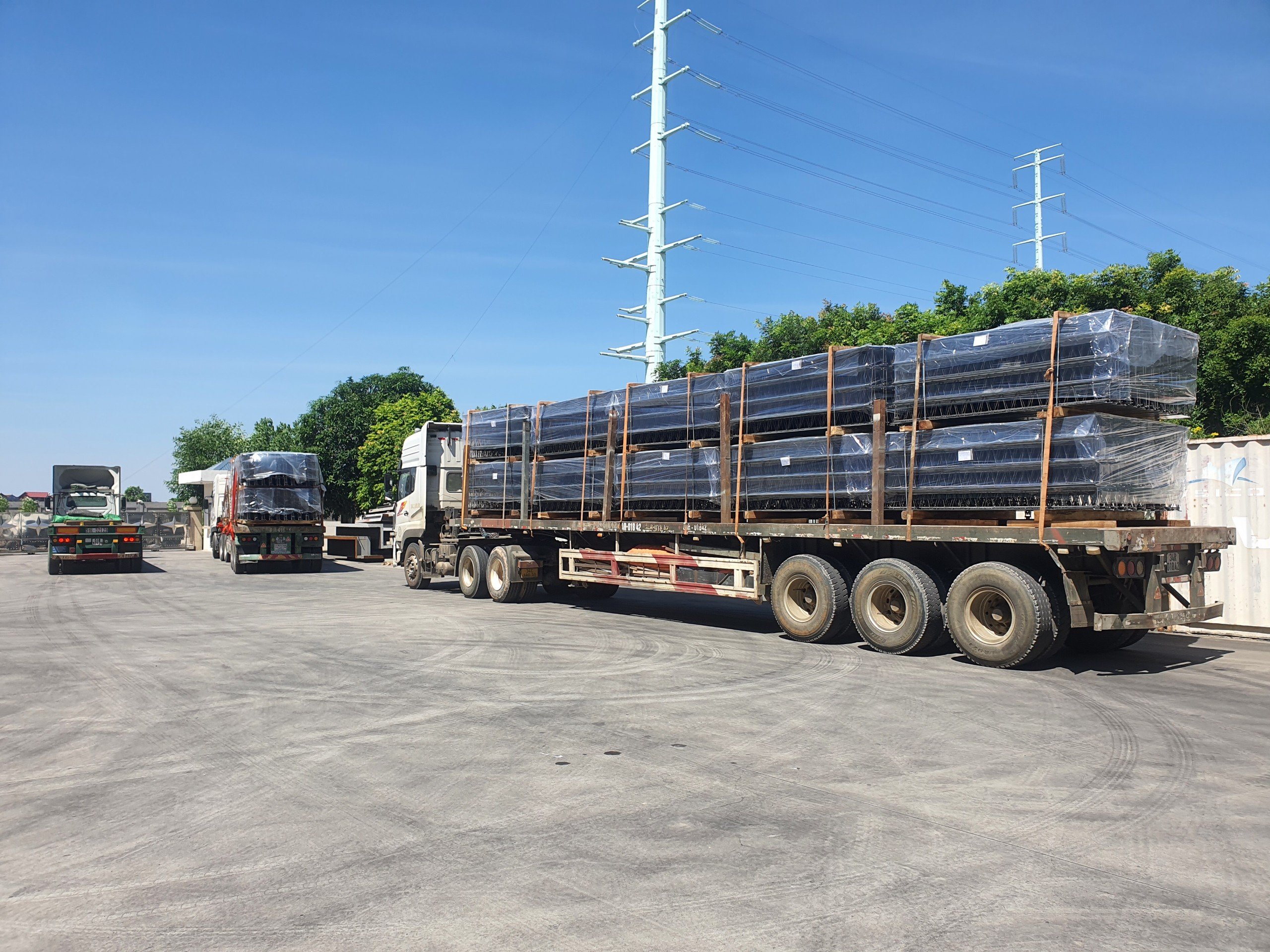
Why SP Deck (Truss Deck) Provides Better Load Capacity and Cost Efficiency
Floor systems play a critical role in the structural performance, construction speed, and overall cost of industrial and commercial buildings. For projects involving warehouses, factories, office buildings, and multi-story industrial facilities, selecting the appropriate floor system can significantly impact both construction schedules and long-term performance.
While conventional metal decking systems have been widely used for decades, modern projects increasingly adopt SP Deck (Truss Deck) solutions due to their superior load-bearing capabilities, reduced temporary support requirements, and faster installation processes. As labor costs rise and project timelines become more compressed, developers and engineers are seeking floor systems that maximize efficiency without compromising structural integrity.
Understanding the differences between SP Deck, Truss Deck, and traditional metal decking systems is essential for making cost-effective structural decisions.
Evaluating Multi-Story Commercial Industrial Floor Plans and Steel Structures
Multi-story industrial buildings, mezzanine structures, and commercial facilities require floor systems capable of supporting various load conditions while maintaining flexibility and construction efficiency.
Typical applications include:
- Manufacturing plants
- Logistics warehouses
- Data centers
- Office buildings
- Steel mezzanine floors
- Commercial facilities
Structural engineers must consider several factors during floor design, including:
- Dead load and live load requirements
- Heavy machinery loads
- Future expansion flexibility
- Vibration control
- Construction speed
- Overall structural cost
The floor system directly influences beam sizes, column spacing, and foundation requirements, making it one of the most important decisions in structural design.
What Is SP Deck (Truss Deck) and How Does It Optimize Construction Speed?
SP Deck, also known as Truss Deck or Deck Truss, is a prefabricated floor system consisting of steel truss reinforcement integrated with galvanized steel decking. Unlike conventional metal deck systems that often require extensive temporary support, SP Deck utilizes truss action to provide greater stiffness and load-carrying capacity during construction.
Key advantages of SP Deck include:
Reduced Temporary Supports
The truss configuration allows larger spans during concrete casting, minimizing or eliminating temporary shoring in many applications.
Faster Installation
Prefabricated panels simplify site installation and reduce labor requirements.
Improved Construction Safety
Less scaffolding and fewer temporary supports create safer working environments.
Reduced Construction Duration
Projects can proceed faster because floor installations and concrete works become more efficient.
Better Structural Performance
The integrated truss system provides improved load distribution and stiffness.
These advantages make SP Deck increasingly popular in industrial and commercial construction projects.
Comprehensive Analysis: SP Deck vs Traditional Metal Cladding/Decking
Choosing between Truss Deck and traditional metal decking requires evaluating several performance criteria.
Load Capacity
SP Deck
- Higher load-bearing capacity
- Suitable for heavier live loads
- Better structural stiffness
Traditional Metal Deck
- Moderate load capacity
- May require additional supports
- Less efficient for long spans
Concrete Slab Thickness
SP Deck
- Optimized slab thickness
- Improved composite action between steel and concrete
- Reduced material usage in some applications
Traditional Metal Deck
- May require thicker slabs depending on span and loading conditions
Temporary Support Requirements
SP Deck
- Reduced or eliminated temporary shoring
- Lower labor costs
Traditional Metal Deck
- More extensive temporary supports are often required
Construction Speed
SP Deck
- Faster installation
- Reduced project schedules
Traditional Metal Deck
- Longer installation periods
Overall Cost Efficiency
Although the material cost of SP Deck may sometimes be slightly higher, savings from reduced labor, shorter schedules, and lower temporary support requirements often result in better overall project economics.
Structural Steel Mezzanine Design Limits and Heavy Point Load Tolerances
Industrial mezzanine floors frequently experience concentrated loads from machinery, pallet racks, and material handling equipment. Therefore, floor systems must be designed to resist both distributed and point loads.
Important design considerations include:
- Heavy equipment loading
- Forklift traffic
- Vibration performance
- Long-span requirements
- Deflection control
- Future flexibility
SP Deck systems provide superior rigidity and load distribution, making them suitable for:
- Manufacturing mezzanines
- Warehouse platforms
- Data center floors
- Equipment rooms
- Commercial multi-story buildings
Structural engineers can optimize beam sizes and reduce overall steel consumption by utilizing composite floor action.
Cost Savings Beyond Materials
Many developers focus only on material prices when comparing floor systems. However, total project cost includes:
- Labor expenses
- Temporary support systems
- Construction duration
- Equipment rental
- Project overhead
- Future maintenance requirements
By reducing installation time and minimizing temporary works, SP Deck systems can generate significant cost savings throughout the project lifecycle.
Applications of SP Deck in Modern Buildings
SP Deck systems are widely used in:
- Factories and industrial buildings
- Logistics warehouses
- Multi-story office buildings
- Parking structures
- Data centers
- Commercial buildings
- Steel mezzanine platforms
Their ability to combine speed, structural performance, and cost efficiency makes them increasingly attractive for modern construction projects.
Summary
Selecting the right floor system has a major impact on structural performance, construction speed, and project costs. Compared with conventional metal decking systems, SP Deck (Truss Deck) offers superior load capacity, reduced temporary support requirements, and faster installation.
For multi-story industrial buildings, mezzanines, warehouses, and commercial facilities, SP Deck systems provide long-term value by improving efficiency and optimizing overall construction costs. As projects continue to demand shorter schedules and greater structural performance, SP Deck has become an increasingly preferred solution among engineers and developers.
SP Deck is a prefabricated composite floor system consisting of steel trusses integrated with galvanized deck sheets, designed to improve load capacity and construction efficiency.
Yes. Truss Deck systems generally provide greater stiffness and higher load-bearing capabilities, especially for longer spans and heavy loads.
Yes. In many applications, SP Deck minimizes or eliminates temporary shoring, reducing labor and construction time.
Yes. SP Deck systems are widely used for steel mezzanines, warehouses, factories, and multi-story buildings due to their excellent load performance.
Yes. Although material costs may vary, reduced labor, faster installation, and fewer temporary supports often result in lower total project costs.